
Live Edge vs Straight Edge Furniture: Organic Design vs Refined Precision
Furniture is more than just functional—it shapes the character, mood, and identity of a space. Whether you’re designing a modern home or curating a timeless interior, the choice between live edge and straight edge (conventional) furniture plays a defining role.
At its core, this isn’t just a stylistic decision—it’s a contrast between nature-led design and structured craftsmanship. Understanding this distinction helps you choose pieces that truly reflect your space and sensibility.
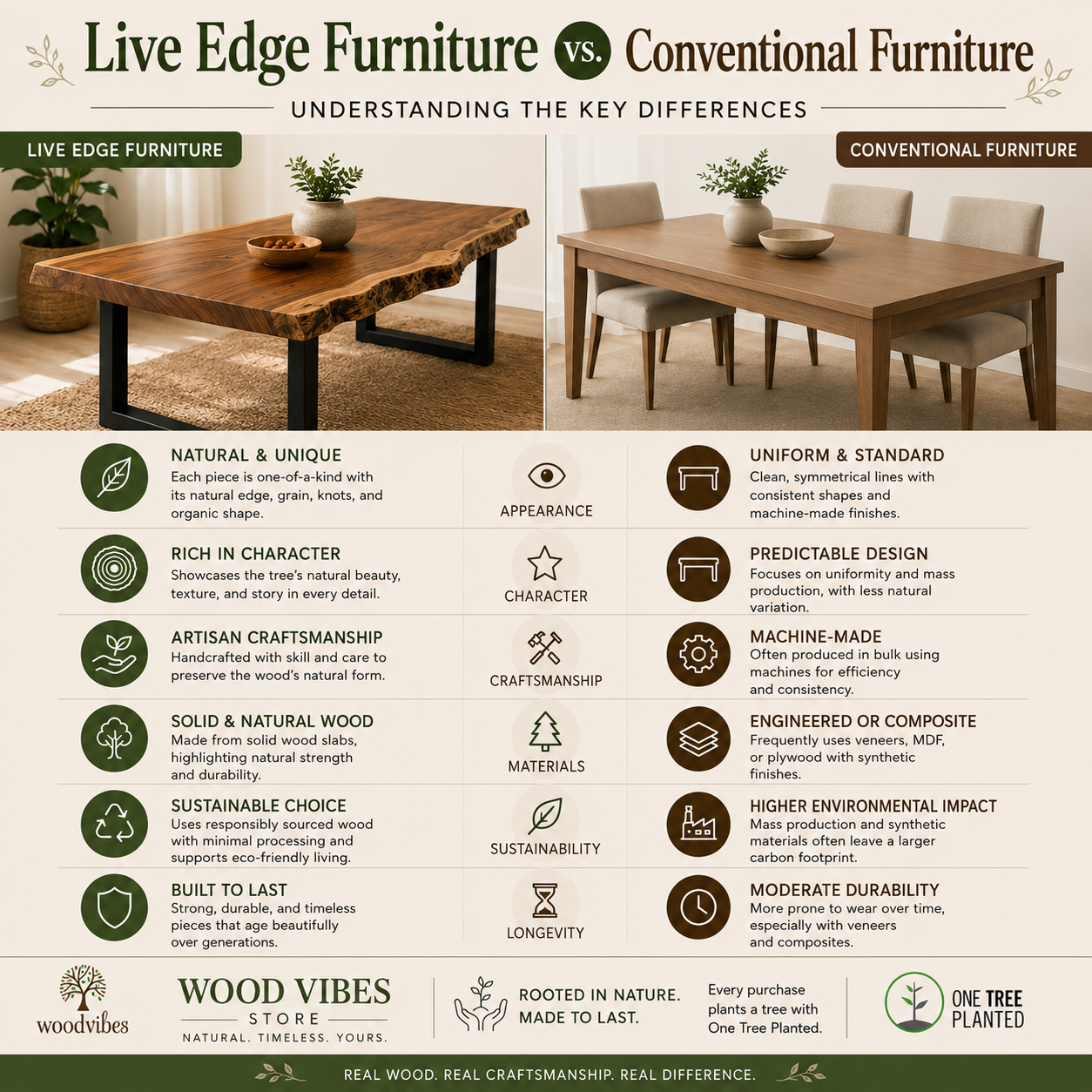
Design Language: Organic vs Refined
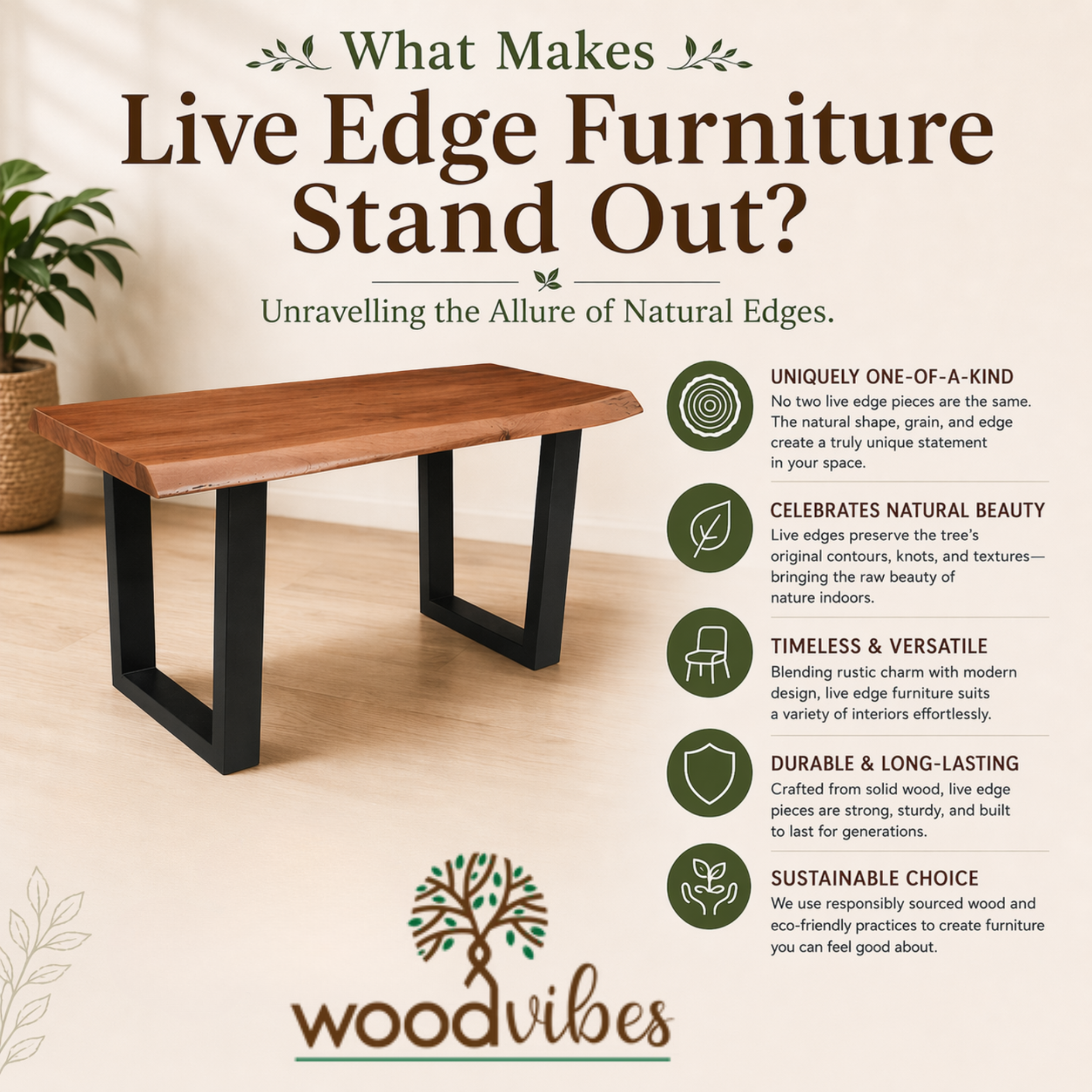
Live edge furniture celebrates the raw, untouched beauty of nature. Crafted from solid wood slabs that retain the tree’s natural edges, each piece carries its own grain patterns, curves, and imperfections. The result is fluid, sculptural, and inherently organic.
Straight edge (conventional) furniture, in contrast, is defined by precision and symmetry. Clean lines, uniform edges, and balanced proportions create a polished, structured aesthetic that feels intentional and refined.
Craftsmanship & Material Integrity
Live edge pieces are typically artisan-crafted, where each slab is carefully selected, shaped, and finished. The process respects the material rather than reshaping it entirely—allowing the wood’s natural story to remain intact.
Straight edge furniture often relies on standardized production techniques, ensuring consistency in form and finish. While this brings efficiency and uniformity, it prioritizes precision over individuality.
Visual Impact in a Space
Live edge furniture acts as a statement piece. Its natural contours and one-of-a-kind form immediately draw attention, adding warmth and an organic focal point to modern interiors. It works especially well in spaces that balance minimalism with texture.
Straight edge furniture contributes to a cohesive and structured visual flow. Its uniformity allows it to blend seamlessly into both contemporary and classic settings, supporting the overall design without overpowering it.
Individuality vs Consistency
No two live edge pieces are ever identical. Each table, bench, or shelf is entirely unique, shaped by nature itself. This exclusivity makes live edge furniture highly desirable for those seeking character and distinction.
Straight edge furniture, on the other hand, offers consistency and repeatability. Every piece follows a defined design language, making it easier to match and scale across larger spaces.
Longevity & Character Over Time
Live edge furniture evolves beautifully with age. As the wood matures, it develops depth, patina, and character, enhancing its organic appeal over time.
Straight edge furniture maintains its clean and consistent appearance, offering durability with a more controlled and predictable aging process.
Sustainability & Material Sourcing
Live edge furniture often utilizes reclaimed or responsibly sourced wood, making it a more sustainable choice. By preserving natural slabs, it minimizes waste and celebrates the full life of the material.
Straight edge furniture may rely more on processed or newly sourced materials, depending on production methods, which can have a greater environmental footprint if not managed responsibly.
The Final Perspective
The choice between live edge and straight edge furniture isn’t about better or worse—it’s about intent.
- Choose live edge if you’re drawn to organic beauty, individuality, and a connection to nature.
- Choose straight edge if you prefer precision, balance, and a refined, structured aesthetic.

Leave a comment
This site is protected by hCaptcha and the hCaptcha Privacy Policy and Terms of Service apply.